OWNERSHIP
Work disappears between teams.
Requests, decisions, and next steps move through meetings and messages without a clear owner or destination.
Workcraft maps how work moves across your team, then designs and implements the workspace, governance, and habits that make Notion reliable at scale.
A workspace can look organized while the work underneath it remains hard to follow. The cracks show up in ownership, reporting, permissions, and onboarding.
Requests, decisions, and next steps move through meetings and messages without a clear owner or destination.
Databases multiply, naming drifts, and leaders cannot get a trustworthy view without asking for another update.
Access decisions happen page by page, which makes confidential work harder to manage and the workspace harder to maintain.
Teams receive a new workspace without the rules, training, and feedback loops required to use it consistently.
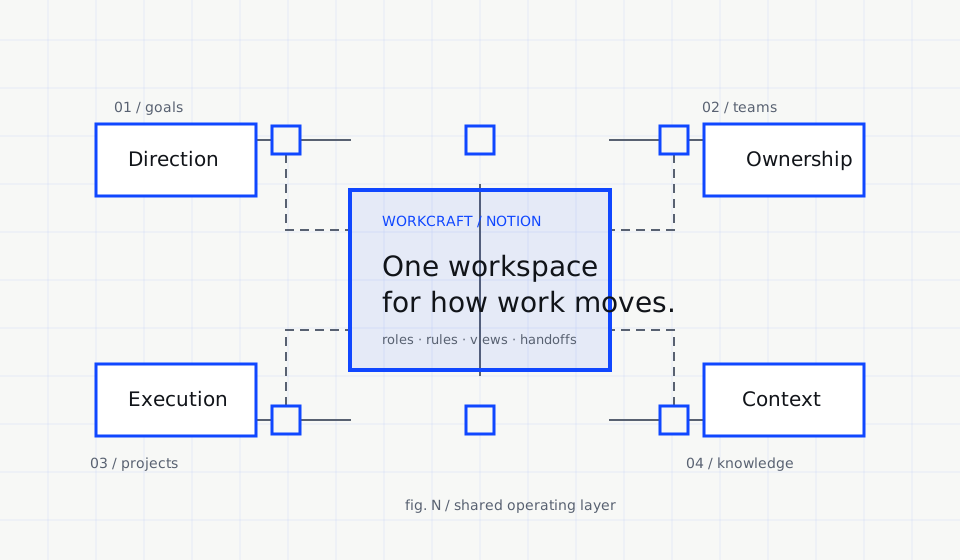
The workspace is the output of the operating decisions: what belongs where, who owns it, how it moves, and which view each role needs.
Interview the people closest to the workflow and document the real handoffs, bottlenecks, and decisions.
Define the information model, teamspaces, permissions, templates, rules, and migration plan.
Ship working workflows in focused increments, connect the right tools, and test with real work.
Train by role, document the operating rules, collect feedback, and hand ownership to your team.
90% process, 10% building. The quality of the workspace depends on the decisions made before anyone creates a database.
“Dave has been incredibly helpful for our team in implementing Notion systematically throughout the organization.”
“Knocked it out of the park, from recreating workflows to rethinking our workspace design so it flexes to our needs.”
5.0 across 20 reviews · Notion Solutions Partner · Certified Notion Consultant
Yes. Workcraft can audit the current structure, preserve what works, consolidate duplication, and redesign the parts that no longer fit. A rebuild is recommended only when the existing architecture would make migration riskier or adoption harder.
Yes. The architecture starts with shared standards, then gives each function the views and workflows it needs. Governance, permissions, and ownership are designed before the rollout expands.
Workcraft maps source data before migration, defines access by role and teamspace, tests with a limited group, and verifies the new structure before the old source is retired.
Yes. Training is tied to each role's real work. Your team receives documentation, live sessions, and a clear owner for feedback and ongoing workspace decisions.
In 30 minutes, Dave will help you identify the operating problem, the likely workspace scope, and whether Workcraft is the right implementation partner.